
How to Compare Car Insurance Rates and Save Hundreds This Year

Car insurance prices can differ by hundreds or even thousands of dollars for the same driver, vehicle and coverage level. Learning how to compare car insurance rates properly can uncover meaningful savings without forcing you to accept weak protection or an unaffordable deductible. The key is to compare like-for-like policies rather than choosing whichever company displays the smallest monthly payment.
This guide explains what to review, what affects your premium and how drivers in both the United States and Saudi Arabia can make a smarter decision.
Why Car Insurance Rates Vary Between Companies
Every insurer uses its own formula to estimate the likelihood and potential cost of a claim. Two companies can review the same driving record and reach very different conclusions because each gives different weight to age, location, vehicle type, mileage and previous claims.
One insurer may be particularly competitive for experienced drivers with clean records. Another may offer better rates to households with several vehicles, low-mileage motorists or customers who combine their auto and homeowners insurance.
Coverage choices also create major price differences. A liability-only policy costs less because it does not normally pay to repair your own vehicle. A full-coverage policy usually combines liability insurance with collision and comprehensive protection, although “full coverage” is an informal U.S. term rather than a standardized policy.
Your deductible makes a difference as well. A policy with a $1,000 collision deductible will generally cost less than one with a $250 deductible, but the cheaper policy requires you to contribute more after a covered claim. The National Association of Insurance Commissioners advises drivers to consider whether they could comfortably pay the selected deductible before choosing it.
How Much Could You Save by Comparing Rates?
National averages provide a useful reference point, but they cannot predict your personal premium. One 2026 analysis placed average U.S. car insurance costs at about $199 per month for full coverage and $63 per month for minimum coverage. Another estimated full coverage at approximately $244 per month and minimum coverage at $131, showing how results can change according to the driver profile, limits and methodology used.
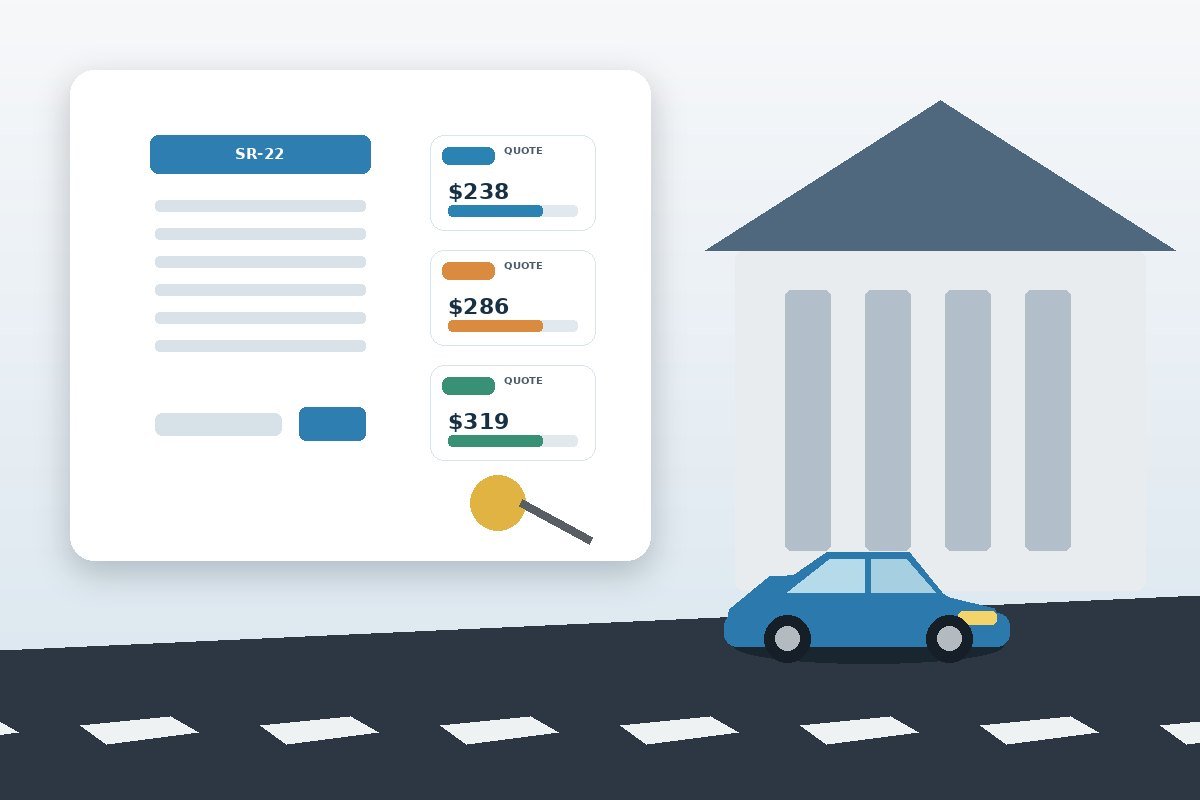
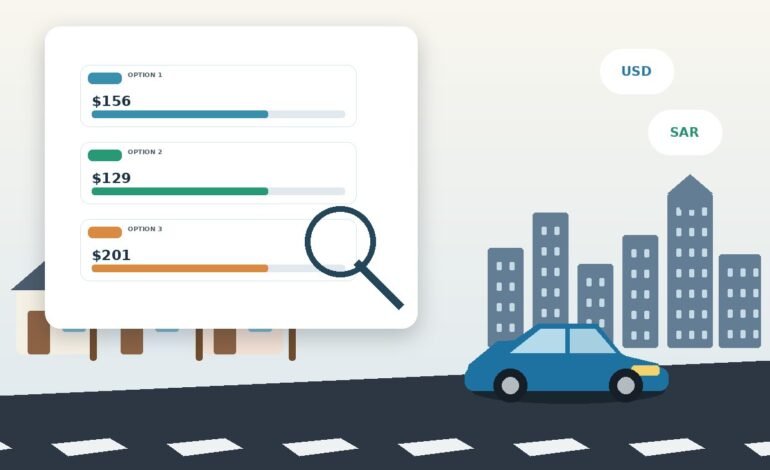
The difference between individual quotations can be even larger. Imagine that a 40-year-old driver with a clean record receives annual full-coverage offers of $1,920, $2,480 and $3,160. Choosing the lowest equivalent policy would save $1,240 compared with the highest offer.
That saving is only genuine when the policies match. A $1,920 policy with lower liability limits, no uninsured motorist coverage and a $1,500 deductible may not be better value than a $2,150 policy offering stronger protection and a $500 deductible.
Monthly payment plans can also make a policy appear cheaper than it is. Compare the complete six-month or annual cost, including the initial deposit, installment charges and policy fees. Paying the full term upfront may qualify for a discount with some insurers, but only choose that option when it works comfortably within your budget.
How to Compare Car Insurance Rates Correctly
Before requesting prices, decide what coverage you actually need. Using your current declarations page as a starting point can help because it shows your existing liability limits, deductibles and listed vehicles.
Request at least three quotes, although five will provide a broader picture of the market. Include a mixture of national insurers, regional companies, direct providers and independent agents where possible.
Use the following process for every quotation:
- Enter the same driver, address, mileage and vehicle information.
- Select identical bodily injury and property damage liability limits.
- Use the same collision and comprehensive deductibles.
- Match optional benefits such as rental reimbursement and roadside assistance.
- Compare the total policy-term cost rather than only the monthly payment.
The NAIC recommends reviewing your required coverage before shopping and requesting revised quotations when online results do not contain matching limits. It also advises considering service, dependability and financial condition alongside price.
Look carefully at uninsured and underinsured motorist protection. A quote may appear unusually inexpensive because this coverage has been reduced or removed where state law allows. Medical payments coverage, personal injury protection and accident forgiveness can also differ between insurers.
Once the quotations match, investigate the companies themselves. Your state insurance department can confirm whether an insurer or agent is licensed and may provide consumer complaint information. A slightly higher premium may be worthwhile when the company offers stronger claims support and fewer restrictive conditions.
Factors That Can Raise or Lower Your Premium
Your driving history is one of the most influential pricing factors. At-fault accidents, speeding tickets and serious violations can increase rates, while several claim-free years may make you eligible for better pricing or safe-driver discounts.
Age and experience matter too. Younger motorists generally pay more because they have shorter driving histories and are viewed as more likely to be involved in accidents. Adding a teenager to a household policy can therefore create a noticeable increase.
The vehicle’s value, repair cost, safety record and theft risk also affect the premium. A family sedan with widely available parts may be cheaper to insure than a luxury SUV containing expensive cameras, sensors and specialist components.
Location changes the calculation because accident frequency, vehicle theft, medical bills, severe weather and repair prices vary between ZIP codes. In states where it is permitted, insurers may also use credit-based insurance information as part of their rating process.
You may be able to reduce the cost through multi-car, bundling, low-mileage, good-student or approved defensive-driving discounts. Usage-based insurance can benefit some careful drivers, although these programs may monitor mileage, braking, acceleration and driving times. Always read the data and pricing terms before enrolling.
How to Compare Car Insurance in Saudi Arabia
Drivers trying to compare car insurance Saudi Arabia options will encounter different terminology and legal requirements from those used in the United States. Third-party liability insurance is the compulsory foundation of Saudi motor coverage, while comprehensive insurance can also protect the policyholder’s own vehicle.
The unified compulsory policy covers qualifying injury and property damage caused to third parties. The insurer’s combined maximum liability for one event during the policy period is SAR 10 million, subject to the policy’s terms and exclusions.
Do not compare Saudi policies on price alone. Check the deductible, insured vehicle value, geographical limits, roadside assistance and whether repairs will be completed at an approved workshop or an authorized dealership. Agency repair can be attractive for newer vehicles but may increase the premium.
For example, one driver might receive third-party quotations of SAR 1,100 and SAR 1,650. Comprehensive offers for the same car could be SAR 3,800 and SAR 5,600, depending on the vehicle value, driver profile, deductible and repair arrangement. These figures are illustrative rather than guaranteed market averages.
Use insurers and intermediaries licensed by the Saudi Insurance Authority, and verify the policy details before paying. The regulator maintains information about licensed entities, regulations and consumer services on its official portal.
Common Mistakes That Make Comparison Less Useful
The biggest mistake is changing the coverage on each application. If one quotation has $100,000 of property damage liability and another has only $25,000, the prices do not represent the same product.
Another error is entering inaccurate information to obtain a lower initial estimate. Insurers may later verify your claims, driving history and vehicle details, causing the premium to change. Undisclosed household drivers could also create difficulties if a claim occurs.
Avoid choosing a deductible based only on the monthly saving. A $2,000 deductible may look attractive until your vehicle needs repairs and you must produce that amount immediately.
Finally, do not cancel your existing insurance before the new policy becomes active. Confirm the effective date, receive your insurance documents and check the final premium first. A coverage lapse can leave you legally and financially exposed.
Frequently Asked Questions
How often should I compare car insurance prices?
Review prices before every renewal or at least once a year. You should also shop after moving, changing vehicles, adding a driver or when an old accident or traffic violation is no longer affecting your recent record.
How many quotes should I request?
Three is the minimum useful number, but five quotes provide a better view of the available market. Use identical information and coverage selections for every insurer.
Should I choose the company with the lowest rate?
Not automatically. Check the liability limits, deductibles, exclusions, complaint history and claims service before deciding. The best policy combines competitive pricing with dependable protection.
What should I check when I compare car insurance Saudi Arabia policies?
Confirm whether the offer is third-party or comprehensive, then review the deductible, vehicle value, repair arrangement and optional benefits. Make sure the insurer or intermediary is licensed by the Saudi Insurance Authority.
Conclusion
Comparing car insurance is worthwhile because insurers can charge very different prices for nearly identical protection. Decide on your coverage first, request several matching quotations and judge each policy by its total cost, deductible and claims support.
Whether you drive in the United States or Saudi Arabia, careful comparison can prevent overpaying while preserving the coverage you need. Compare car insurance rates today and see how much you could save before your next renewal.