


Commercial Truck Insurance: Costs, Coverage, and How to Get the Cheapest Quote

Running a trucking business means carrying risks that ordinary commercial auto policies may not fully address. Commercial truck insurance can protect an owner-operator or fleet against liability claims, vehicle damage, cargo losses and costly interruptions after an accident. Premiums are rarely cheap, but competing insurers may quote very different prices for the same truck and driver.
What Commercial Truck Insurance Covers
Commercial truck insurance is a group of coverages designed for vehicles used to haul goods, equipment or specialized loads. The correct package depends on whether you operate under your own authority, lease onto a motor carrier, own the trailer and transport cargo for customers.
Primary auto liability covers bodily injury and property damage for which the trucking business is legally responsible. Federal rules set minimum financial-responsibility levels for certain interstate carriers, while brokers, shippers and contracts may require higher limits. FMCSA also requires regulated entities to maintain the appropriate insurance filings to keep operating authority active.
Physical damage coverage protects the insured truck against covered collision and non-collision losses such as theft, fire, vandalism or severe weather. Motor truck cargo insurance can cover qualifying loss or damage to freight in your care.
Other options include trailer interchange, non-trucking liability, bobtail coverage, rental reimbursement and roadside assistance. The package should reflect what you haul and how the truck is used rather than whatever an online form selects automatically.
How Much Does Commercial Truck Insurance Cost?
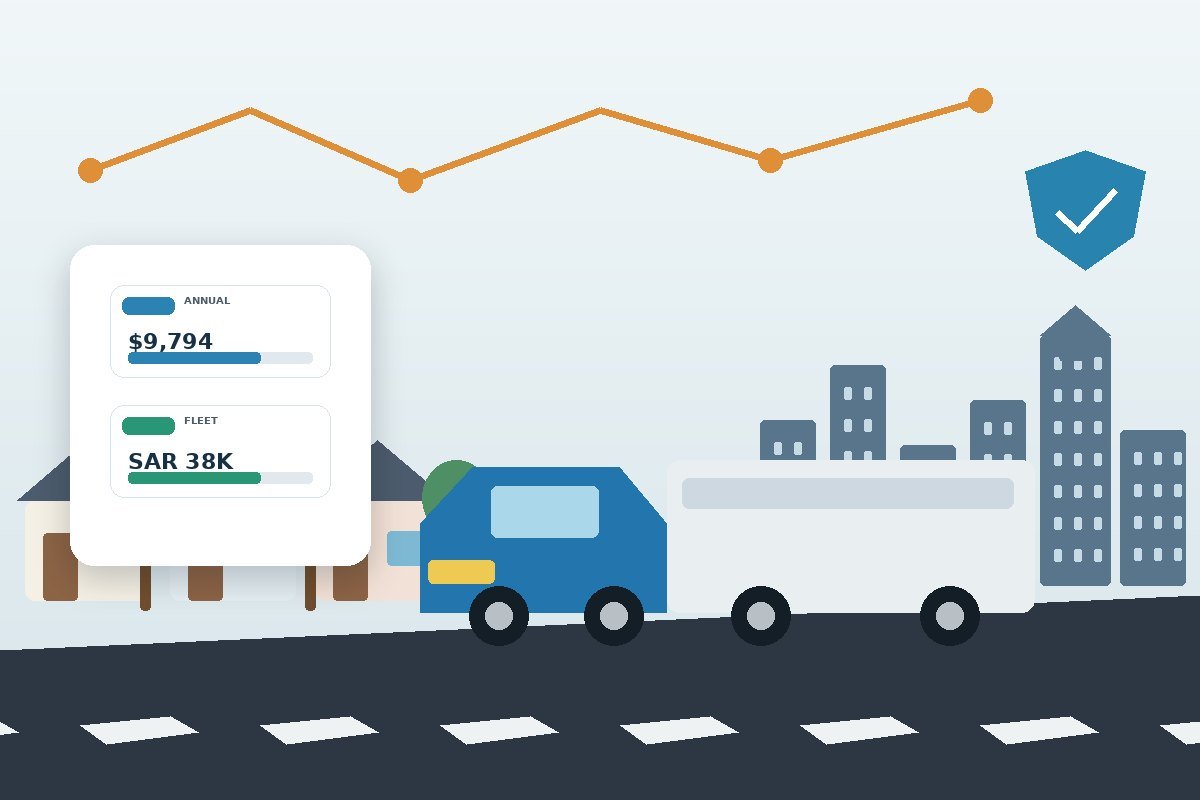
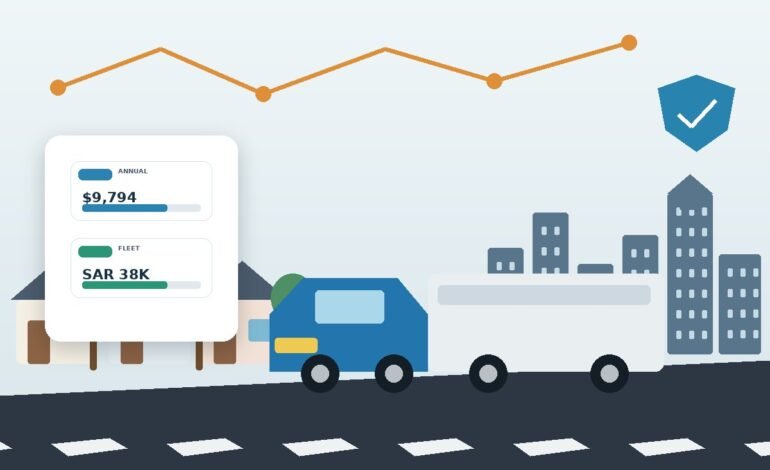
Truck insurance costs vary considerably. Insureon reports that owner-operator trucking businesses buying through its platform pay an average of about $816 per month, or $9,794 annually, for commercial vehicle insurance. Progressive’s 2025 customer data showed average monthly premiums of $734 for for-hire specialty trucks and $926 for for-hire transport trucks.
A new owner-operator under their own authority might receive annual package quotes of $11,000, $15,500 and $21,000. A driver leased to a motor carrier may pay less for some coverages because the carrier supplies primary liability. These examples are illustrative, and the lease should be checked to see what remains the driver’s responsibility.
Premiums can rise for hazardous materials, poor driving records, high-value cargo and long-haul work. A local box truck may therefore cost much less to insure than a tractor-trailer hauling general freight across several states.
Deductibles also matter. Increasing a physical damage deductible from $1,000 to $2,500 may lower the premium, but the business must be able to fund the larger amount after a claim.
Factors That Affect the Price
Insurers consider the truck’s type, age, value, gross vehicle weight and attached equipment. A semi, dump truck, tow truck and refrigerated box truck create different claim exposures.
Driver quality is equally important. Commercial driving experience, motor vehicle records, accidents, violations and employment history may affect both eligibility and price. A fleet with frequent driver turnover can be harder to insure than one with stable operators.
Operating radius, annual mileage and garaging location influence how much road exposure the insurer accepts. Cargo matters too because household goods, automobiles, refrigerated products and hazardous substances present different loss values.
Current federal rules generally specify $750,000 in public liability for qualifying for-hire carriers of nonhazardous property using vehicles rated at 10,001 pounds or more. Certain oil and hazardous-material operations require $1 million, while specified high-hazard cargo requires $5 million.
Claims history, safety procedures, requested limits and previous continuous coverage can also influence the quotation.
How to Get the Cheapest Commercial Truck Insurance Quote
Affordable coverage begins with accurate records. Before requesting prices, collect details about the business, truck, drivers, routes, cargo, mileage and operating authority.
Use the same information for every insurer:
- Request three to five quotes from trucking specialists and independent agents.
- Match liability, cargo and physical damage limits.
- Compare deductibles, exclusions, deposits and installment fees.
- Confirm that required FMCSA filings are included.
- Ask about telematics, paid-in-full and multi-policy discounts.
- Review the insurer’s claims support and trucking experience.
A written safety program may make the business more attractive to underwriters. Documented maintenance, driver screening and coaching based on telematics data can also reduce preventable losses.
Never cancel an existing policy before its replacement is active. FMCSA says regulated carriers must keep proof of insurance current, and missing filings can trigger proceedings affecting operating authority.
Insurance Companies in Saudi Arabia and Truck Coverage
Trucking businesses in the Kingdom should compare commercial motor products from properly licensed insurance companies in Saudi Arabia. Saudi compulsory motor insurance provides third-party liability protection, while broader commercial or comprehensive coverage may be needed for damage to the truck, cargo, trailers and specialist equipment.
The Saudi Insurance Authority maintains official information about licensed insurers and insurance-service providers. Check the provider’s current regulatory status before purchasing through an insurer, broker or digital platform, particularly because enforcement decisions and licensing statuses can change.
A logistics company operating between Riyadh, Jeddah and Dammam should review the insured territory, vehicle classification, driver conditions, cargo exclusions, repair arrangements and deductible. Businesses crossing GCC borders should confirm whether the policy extends outside Saudi Arabia.
When comparing insurance companies in Saudi Arabia, consider claims access, approved repair networks, bilingual support, cargo options and the speed of issuing fleet documentation—not just the annual premium.
Common Mistakes to Avoid
A common mistake is buying a generic commercial auto policy without explaining the actual trucking operation. Undisclosed long-haul work, hazardous cargo or trailer use may lead to inaccurate pricing and claim disputes.
Another is assuming primary liability covers the truck or its cargo. Physical damage and motor truck cargo are separate protections that usually must be selected individually.
Owner-operators should read lease agreements instead of assuming the motor carrier supplies everything. The lease may leave non-trucking liability, physical damage, occupational accident coverage or deductibles with the driver.
Finally, compare the total policy cost. A low monthly figure can hide a large deposit, finance charges or restrictive payment terms.
Frequently Asked Questions
What is the minimum truck insurance required by FMCSA?
The amount depends on the vehicle and cargo. For qualifying interstate for-hire carriers of nonhazardous property in vehicles rated at 10,001 pounds or more, the federal minimum is generally $750,000. Certain hazardous materials require $1 million or $5 million.
Does truck insurance cover cargo?
Only when motor truck cargo coverage is included and the loss meets the policy terms. Check limits and exclusions for theft, refrigeration failure, unattended vehicles and particular commodities.
Is insurance cheaper when an owner-operator leases to a carrier?
It can be because the carrier may provide primary liability. The owner-operator may still need physical damage, non-trucking liability and other coverage.
How should I compare Saudi truck insurers?
Verify licensing through the Saudi Insurance Authority, then compare liability, physical damage, cargo, deductibles, repair networks and geographic limits using identical business details.
Conclusion
Commercial trucking insurance should match the truck, cargo, routes, drivers and contractual obligations of the business. Suitable liability limits, cargo protection and an affordable physical damage deductible matter more than the smallest monthly payment.
Prepare accurate records, compare specialist insurers and keep every required filing active. Request commercial truck insurance quotes today to find dependable protection at the most competitive rate available.