
Car Insurance for Young Drivers: How to Find Affordable Coverage

Getting a driver’s license brings freedom, but the first insurance quote can quickly spoil the excitement. Car insurance for young drivers is often expensive because insurers have less driving history to evaluate and younger motorists are statistically more likely to make a claim. That does not mean every teenager or young adult must accept the first high premium they receive.
By choosing the right vehicle, comparing equivalent policies and using age-specific discounts, young drivers and their families can reduce the cost without settling for dangerously limited protection.
Why Insurance Costs More for Young Drivers
Insurance companies calculate premiums according to the likelihood and potential cost of a future claim. A newly licensed driver has little or no established record, so the insurer cannot rely on several years of accident-free driving when assessing the risk.
Age is not the only consideration. Location, annual mileage, vehicle type, coverage limits, previous claims and traffic violations can all influence the price. In states where the practice is allowed, credit-based insurance information may also affect rates once the young driver has established a credit history.
The vehicle can make a particularly large difference. A powerful sports car, luxury model or expensive electric vehicle may cost more to repair than a modest sedan with widely available parts. The National Association of Insurance Commissioners advises families to consider insurance costs before buying a vehicle for a teenager and notes that adding a teen to an expensive sports car can raise premiums considerably.
Young drivers should also understand the difference between liability-only and full coverage. Liability insurance pays qualifying injury and property-damage costs when the insured driver causes an accident. Collision and comprehensive coverage can protect the young driver’s own vehicle, subject to the deductible and policy terms.
How Much Does Car Insurance for Young Drivers Cost?
Young-driver premiums vary widely, but recent national research shows how substantial the age difference can be. A 2026 analysis estimated average full-coverage costs of $9,561 per year for a 16-year-old, $6,779 for an 18-year-old and $5,227 for a 19-year-old. By age 25, the estimated average had fallen to $2,842, assuming the driver maintained a relatively clean record.
These figures are national estimates rather than guaranteed prices. A young driver in a lower-cost area with a modest car might pay much less, while someone in an expensive city driving a high-performance vehicle could pay considerably more.
Joining a family policy is often more affordable than purchasing a separate policy. In the same analysis, adding a 16-year-old to a parent’s policy increased the household’s average annual cost from $2,959 to $6,170. A separate policy for a 16-year-old averaged $8,608 per year, making the shared family policy expensive but generally more economical.
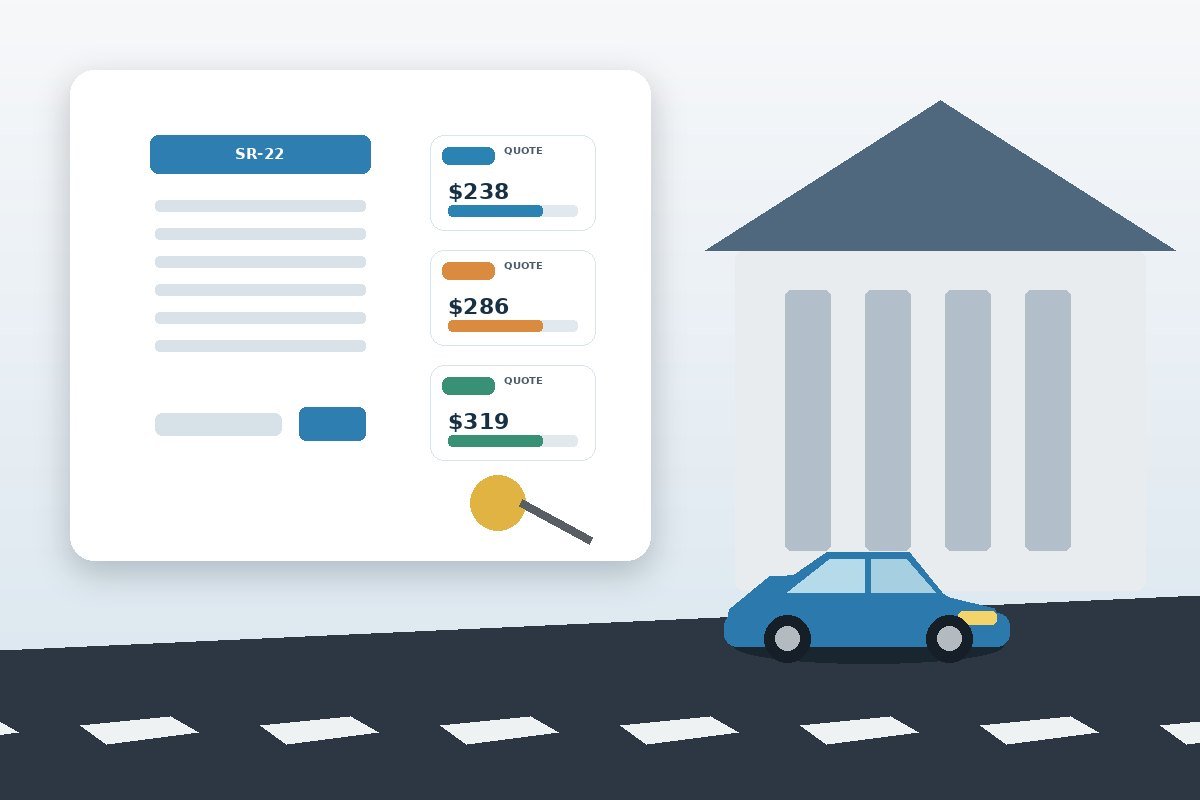
Consider a household that receives three annual quotes after adding an 18-year-old driver: $4,900, $6,200 and $7,750. Selecting the lowest quote could save $2,850 compared with the highest, provided the liability limits, deductibles and vehicle coverage are identical.
A low monthly payment can still hide a large deductible. A policy with a $1,500 collision deductible may look affordable, but the family must be able to produce that amount after an accident before the insurer contributes to covered repairs.
How to Find the Cheapest Rate Without Losing Protection
Finding affordable coverage begins before the young driver gets behind the wheel. Ask insurers for estimates on any vehicle you are considering buying because two similarly priced cars can have very different repair costs and premiums.
It is usually sensible to request quotations both with the young driver added to a family policy and, where appropriate, on a separate policy. Compare the total household cost rather than looking only at the amount assigned to the new driver.
A practical comparison process should include these steps:
- Request at least three to five quotes using identical driver and vehicle information.
- Keep the same liability limits and deductibles on every application.
- Ask whether a good-student or approved driver-training discount is available.
- Check for multi-car, home-and-auto and vehicle-safety discounts.
- Compare the full six-month or annual cost, including installment charges.
- Review the insurer’s complaint history and claims support before buying.
Good-student discounts are commonly aimed at high school or college students who meet the insurer’s academic requirements. Approved driver-education courses may also produce savings, although the course and discount rules differ by company and state. The NAIC identifies good-student, driver-training, multi-car, safety-equipment and home-and-auto discounts as possibilities worth discussing with an insurer.
A student attending college away from home may qualify for another type of reduction when the car remains at the family residence. Eligibility rules differ, so parents should tell the insurer where the student lives and how frequently they use the vehicle.
Usage-based insurance may help a careful young driver establish safer habits and earn a better rate. However, these programs can monitor mileage, braking, acceleration, phone use or driving time. Read the terms carefully because poor driving results may not produce the expected savings.
Choosing the Right Vehicle and Coverage
A young driver does not necessarily need the cheapest or oldest car available. A very old vehicle may lack modern safety features, while a newer luxury car may carry high collision and comprehensive premiums.
Look for a moderately priced vehicle with a good safety record, sensible engine performance and affordable replacement parts. Obtain an insurance estimate before completing the purchase rather than assuming every small car will be inexpensive to cover.
For a financed or leased vehicle, the lender will normally require collision and comprehensive insurance. With an older paid-off car, the owner can compare the annual cost of these coverages with the vehicle’s current market value.
Suppose a car is worth $4,000 and collision coverage costs an additional $850 per year with a $1,000 deductible. The owner should consider the limited maximum benefit available after the deductible and a possible total-loss valuation. Removing collision might be reasonable in some circumstances, but liability coverage should not be reduced carelessly.
Higher liability limits can protect the young driver and family after a serious accident. State-minimum coverage may satisfy the law, but the policyholder can remain personally responsible when damages exceed the insurance limit.
Third Party Car Insurance Saudi Arabia for Young Drivers
The Saudi motor insurance system uses different rules and terminology from the United States. People researching third party car insurance Saudi Arabia should understand that compulsory third-party coverage protects against qualifying physical injury, property damage and related expenses owed to another party.
The Saudi unified compulsory policy sets a combined maximum insurer liability of SAR 10 million for one event during the policy period. This protection does not function like comprehensive coverage for damage to the insured driver’s own vehicle.
A young Saudi resident or expatriate may pay more because of limited driving experience, previous claims, the vehicle model or other underwriting factors. Prices differ between insurers, so drivers should compare quotes from licensed providers rather than relying on a friend’s premium as a guide.
Someone choosing third party car insurance Saudi Arabia may obtain a lower premium than with comprehensive insurance, but the cheaper policy will not normally cover accidental damage to their own car. Comprehensive protection may be more appropriate for a new, financed or valuable vehicle.
When reviewing Saudi quotes, check the deductible, repair network, roadside assistance, geographic coverage and whether repairs are completed at an approved workshop or dealership. Enter the driver, residency and vehicle information accurately to avoid problems when the policy is issued or a claim is made.
Common Mistakes Young Drivers Should Avoid
Buying only the legal minimum without considering the financial consequences is a common mistake. A serious accident can produce costs far above a basic liability limit, potentially exposing the driver or policyholder to the remaining bill.
Failing to list a young household driver is another serious problem. An insurer may change the premium, restrict coverage or investigate the application when an undisclosed regular driver is involved in a claim.
Young motorists should not select an extremely high deductible simply to make the monthly payment smaller. The NAIC recommends confirming that the household could absorb the larger share of a loss before raising collision or comprehensive deductibles.
Families should also review the policy when the student moves, goes to college, buys a vehicle or changes how frequently they drive. Outdated mileage, address or vehicle-use information can lead to inaccurate pricing.
Frequently Asked Questions
Is it cheaper for a young driver to join a parent’s policy?
It usually is, provided the young driver is eligible to be included in the household policy. A separate policy may cost significantly more because the young driver cannot benefit from the family’s existing insurance history, multi-car savings or bundled policies.
At what age do car insurance rates start falling?
Rates often decrease gradually as a driver gains experience and maintains a clean record. There is no automatic price drop guaranteed on a particular birthday because location, vehicle, claims and insurer pricing remain important.
Can good grades lower a young driver’s premium?
Some insurers offer good-student discounts to eligible high school and college students. Academic requirements and maximum ages vary, so ask what documents are needed and whether the discount applies at each renewal.
Does third party car insurance Saudi Arabia cover the driver’s own vehicle?
Compulsory third-party insurance generally pays covered liabilities owed to other parties, not accidental damage to the insured vehicle. Young drivers seeking protection for their own car should compare comprehensive Saudi motor insurance policies.
Conclusion
Affordable insurance for a teenager or young adult requires more than selecting the smallest monthly payment. The vehicle, liability limits, deductible, discounts and choice between a family or separate policy can all change the final cost.
Compare several equivalent offers, ask about student and training discounts, and never hide a regular household driver. Start comparing car insurance for young drivers today to find a policy that offers meaningful protection at a manageable price.